Sunday, 24 January 2021

HMD 2021


it never ceases to matter  and the narratives never cease to be moving.  Despite the worldwide death toll from covid,  the Nazi holocaust remains the outrage of the millennium. 

This week marks the beginning of the end in 1945.  Eva Clarke, born on a rail truck destined for death  saved only because gas supplies failed, recounts her survival and that of her mother in today's Sunday Telegraph 


Eva Clarke Saturday Telegraph magazine, 23 January 2021.pdf

Sunday, 17 January 2021

Hobby Horse


Century Guild wrought iron door hinge at Pownall Hall Cheshire 

Not quite as offbeat as the subtitle The Hobby Horse Men suggests,  this new book fills a long-gaping hole in Arts & Crafts Literature 

 Ivy wallpaper design, 1880s by A.H.Mackmurdo [WMG]

One issue contributing to the lack has been that the official name of the loosely-allied  group of men who comprised the Century Guild - a title as dull as Hobby Horse is quirky -  bears only a rough indication of its function, making a history hard to write.  Ably assisted by literary historian Jean Liddiard, the late Stuart Evans, who sadly died before publication, made valiant,  successful efforts to knit all the strands together.  The variously flying threads provide a mobile web of the whole symphonic enterprise [ to mix a few metaphors ]

The three chief men involved were Arthur Mackmurdo, architect and designer; Herbert Percy Horne, architect and art historian who later settled in Italy; and Selwyn Image, firstly a vicar then poet, painter and stained glass designer.

Century Guild dining chair designed by Mackmurdo, c1882, WMG


Their furniture like this now-famous chair has proved most durable, along with their irregular publication The Hobby Horse, whose title references the Shandean scope of contributors' idiosyncratic passions, while displaying the Guild's taste for fine materials, woodcuts and spacious design that inspired the young Beardsley.  Most of the page, tailpieces and illustrations are elegant; some, like the grotesque, jumbled cover, created by the nominatively-determined Image, are a mess - but an arresting mess.


Arts & Crafts Pioneers

Together with quotations from the Guildsmen's windy, wordy aims about uniting all the arts in pursuit of beauty and freedom, the book offers a lucky dip trawl of 1880s and 90s artefacts and men, including a few women like Michael Field and the Alhambra dancers, whom the men eulogised and (in Image's case) eventually married.    

One notable discovery that came recently to light is a mahogany table-top casket in the manner of a cassone, decorated by Image with late-PreRaphaelite scenes of lost love and perhaps intended for letters sent and received by a now-grieving widower.  Less sentimental is Horne's woodcut depicting the dachshund owned by Matthew Arnold.   Quite surprising in name and appearance is Great Ruffians,  with four pavilions round a lantern-topped tower, like something from Topkapi built by Mackmurdo as a cultural centre in rural Essex - yet another strand, pulling in contemporary Garden City projects.   

It's hard to resist the impression of a distinctly precious, homoerotic atmosphere around much hobby-horse activity, but this is probably an effect of the period's counter-cultural impulses, and of Oscar Wilde's friendship.  Undeniably, Century Guild's products both fed into and fed off emerging Art Nouveau decorative styles, while retaining all its own varied originality.


Thursday, 31 December 2020

Hopeful New Year


New Year met me somewhat sad:
Old Year leaves me tired,
Stripped of favourite things I had
Baulked of much desired:
Yet farther on my road to-day
God willing, farther on my way.

New Year coming on apace
What have you to give me?
Bring you scathe, or bring you grace,
Face me with an honest face;
You shall not deceive me:
Be it good or ill, be it what you will,
It needs shall help me on my road,
My rugged way to heaven, please God.

Christina Rossetti Old & New Year

Delete/ignore the invocations to God, who has been notably absent or impotent this year, and endorse the wish for honesty and no deceptive pronouncements.   Here's hoping for a somewhat better 2021.  All good wishes as New Year rings in.#


Tuesday, 29 December 2020

Mantegna's Magi


 All three Magi in this version wear pink surcoats.   With Virgin and Babe being jostled by so many angelic Innocents [?] , the Kings take centre stage.  All are relatively large, and would be very tall if their limbs were unfolded  - especially  the African King with his long legs and arms.  His blue turban is on the ground.   Only he has a retinue, with at least seven dark, turbaned attendants, and a couple of camels [are others obscured by the damaged patch?]     It's a prodigious filmset landscape of papiermache rocks and a steep winding roadway leading directly to today's fantasy cinema.


Tuesday, 22 December 2020

Tough New Rules

Not, however, those locking us down more and more firmly, but  changes to export licences for works of art and significance.  Coming into force from January, announced by DCMS.


Now museums just [!] need funds to  match auction and sale prices.    But half a step is better than none...


Tough new rules crackdown on sellers to save important cultural items for the public

New rules will give museums and cultural institutions more protection when purchasing items for collections

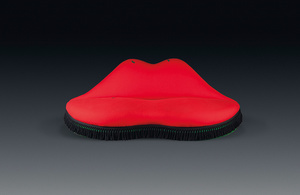
Mae West lips sofa by Dali
  • The increased protections will help prevent some of the nation’s greatest treasures from being lost to overseas buyers
  • New rules will see an end to ‘gentleman’s agreement’ in first shake up of export deferral system in over 65 years

Culture Minister Caroline Dinenage has announced that new protections will be introduced for museums and galleries trying to save our most important treasures from overseas buyers.

Following a public consultation, the introduction of legally binding offers will see an end to the ‘gentleman’s agreement’ that has caused issues for UK museums and galleries when a seller pulls out at the last minute, causing fundraising efforts to be wasted and the work to be lost to public collections.

Under the current system, a pause in the export of national treasures overseas can be ordered by the Culture Minister to give UK museums and buyers the chance to raise funds and keep them in the country. If a UK institution puts in a matching offer on an item subject to an export deferral, and the owner has agreed to sell, it is down to the seller to honour that commitment.

Although a rare occurrence, in the last five years, eight items have been lost to UK collections when a seller refused to honor the ‘gentleman’s agreement’ resulting in months of vital fundraising work by national institutions going to waste. For example, in 2017 the National Gallery raised £30 million to acquire a work which was subsequently pulled from sale by the owner.

The new rules announced today will mean that this can no longer happen. The introduction of legally binding offers will mean that once a UK institution has stepped forward, and an owner has agreed to sell, then they must proceed with the sale.

Culture Minister, Caroline Dinenage, said:

Our museums and galleries are full of treasures that tell us about who we are and where we came from. The export bar system exists so that we can offer public institutions the opportunity to acquire new items of national importance.

It is right that this crackdown will make it easier for us to save items and avoid wasted fundraising efforts by our museums. It will mean that more works can be saved for the nation and go on display, educating and inspiring generations to come.

I welcome the new rules that remove the ambiguities that have led to major works of art being lost to the nation. The clarity will be beneficial to museums and vendors alike.

Funds from the Department for Digital, Culture, Media and Sport have also been made available for the development of a new digital system for export licences, which will be overseen by Arts Council England. This will allow sellers to apply for their export licence online, saving time, effort and expense for exporters. The new system is expected to be live by Autumn 2021.

The new rules, which will come into force on 1 January 2021, will be the first changes to the export bar system in over 65 years and reaffirm the Government’s commitment to the protection of our national treasures, owners’ rights, world-class museums, and the UK’s reputation as a successful international art market in light of the ongoing covid-19 pandemic.

Items that have been saved through the current system include the sledge and flag from Ernest Shackleton’s Nimrod Antarctic Expedition of 1907-09, which has been acquired by the National Maritime Museum and the Scott Polar Research Institute. Salvador Dali’s Lobster Telephone and Mae West Lips Sofa which were acquired by the National Galleries of Scotland and the Victoria and Albert Museum. Lawrence of Arabia’s steel and silver dagger which found a home at the National Army Museum, and the notebooks of Charles Lyell, Darwin’s mentor that were acquired by the University of Edinburgh.

In the ten year period to 2018-19, 39% of items at risk of leaving the UK - worth a total of £103.3 million - were saved for the nation by UK institutions.

ENDS

Notes to editors:

Until 1939, the UK had no legal controls on the export of works of art, books, manuscripts and other antiques. The outbreak of the Second World War made it necessary to impose controls on exports generally in order to conserve national resources.

Items that are being sold abroad are assessed at the point of application for an export licence by the Reviewing Committee on the Export of Works of Art and Objects of Cultural Interest, which establishes whether an object is a national treasure because its departure from the UK would be a misfortune on the basis that it meets the ‘Waverley criteria’.

These are:

Is it closely connected with our history and national life? Is it of outstanding aesthetic importance? Is it of outstanding significance for the study of some particular branch of art, learning or history?

The export control process has always sought to strike a balance, as fairly as possible, between the various interests concerned in any application for an export licence.

The rules will apply to applications for export licences made on or after 1 January 2021. The form can be downloaded from the Arts Council’s website.

Sunday, 13 December 2020

Spartali vs De Morgan ?

 No, i'm joking.  I don't view these artists as rivals. Though the comparisons are interesting in respect of late-Victorian picture-making reputations.


Marie Spartali Stillman's now-famous and much-reproduced image of the lady Dianora in the Enchanted Garden of Messer Ansaldo, (1889) transformed from winter to spring by sorcery, finally came on to the art market last week and sold for £874,500 hammer price.

It's a lovely piece, in detail and in whole. A wonderfully Romantic scene, delicately and deliciously drawn and coloured.   A bit fragile as regards condition - not surprising in a large 780 x 1000mm work on paper in Spartali's characteristically dry watercolour - and superbly reproducible in terms of merchandise.  

The auction details and essay here

A few moments later, Gloria in Excelsis (1893) by Evelyn Pickering de Morgan  depicting a pair of Christmas angels announcing the birth of Jesus to the Shepherds (not seen) with a host of seraphim in the sky, fetched £622,500. 

see here Evelyn de Morgan

Evelyn De Morgan (1855-1919) | Gloria in Excelsis | 19th Century, Paintings | Christie's


It too is brilliantly drawn and coloured with elegant peacock wings and rippling drapery, but more robustly painted in oil and with an impressive pillared frame.  The only drawback, in my view, are the juvenile Victorian faces of the seraphim, with windblown hair as if literally flying in heavenly air.

Both works came from the long-mysterious collection owned by Joe Setton. Both deserve to be publicly available for study.

A third female artist, much less well-known, in fact almost completely unknown, was represented by a small medievalising illustration of a girl trying a  wedding ring for size.   


 By Alice Macallan Swan, this you might have bought for just £15,000, noting its Pre-Raphaelite debts to Rossetti's Ecce Ancilla and Millais's Bridesmaid.

The most intriguing and hitherto quite unknown work in the sale was lot 31, which depicts a medieval scholar in a midwinter library to whom an older necromancer  reveals a vision of a rooftop garden overlooking ships at sea, with himself and an inamorata surrounded by courting couples and musicians.

The catalogue describes this as a version of Boccaccio's Messer Ansaldo tale. The authorship is ascribed to Rossetti's circle.  Both seem good guesses, but not compelling ones.   The main seated figure is reminiscent of Simeon Solomon's style, and the populated vision recalls the manuscript illuminations that were popular in the late 1850s.  But what exactly is the story?

 Untitled and unsigned, it sold for £40 000.